
Suicide prevention
Suicide prevention in northern Queensland
NQPHN is committed to supporting suicide prevention across northern Queensland through collaboration, evidence-based initiatives and community-led action.
We work alongside communities, service providers and partners to strengthen local capacity, respond to the needs of priority populations, and support approaches that promote connection, wellbeing and early intervention.
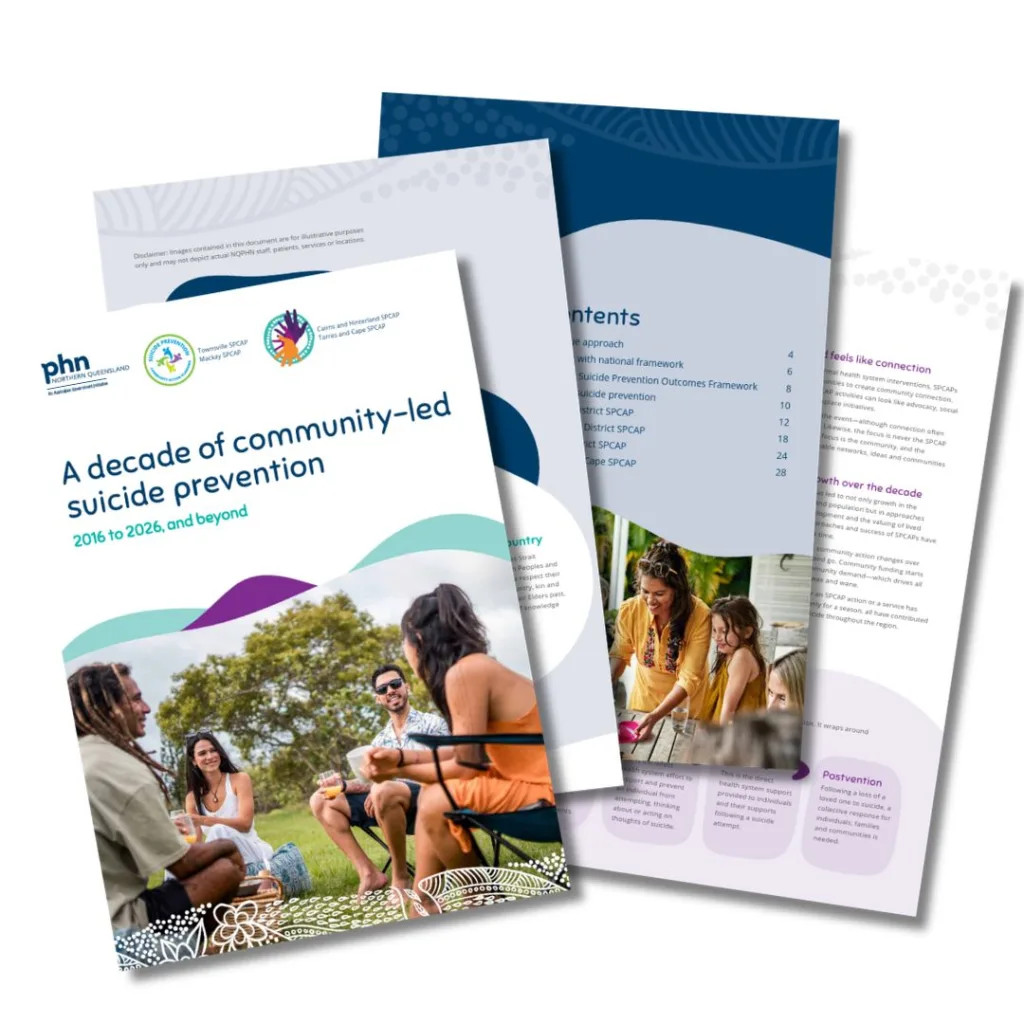
SPCAPs in northern Queensland

Community wellness and suicide prevention grants
Distress Brief Support (DBS) Initiative
The DBS Initiative is a community‑based, non‑clinical service that provides practical, caring support to people experiencing everyday life challenges. Delivered across the Mareeba Shire and Atherton Tablelands, DBS offers connection, reassurance and early support through Community Engagement Points and a short‑term Wellness Team.
➡️ Learn more.
Northern Queensland translation of the National Suicide Prevention Outcomes Framework
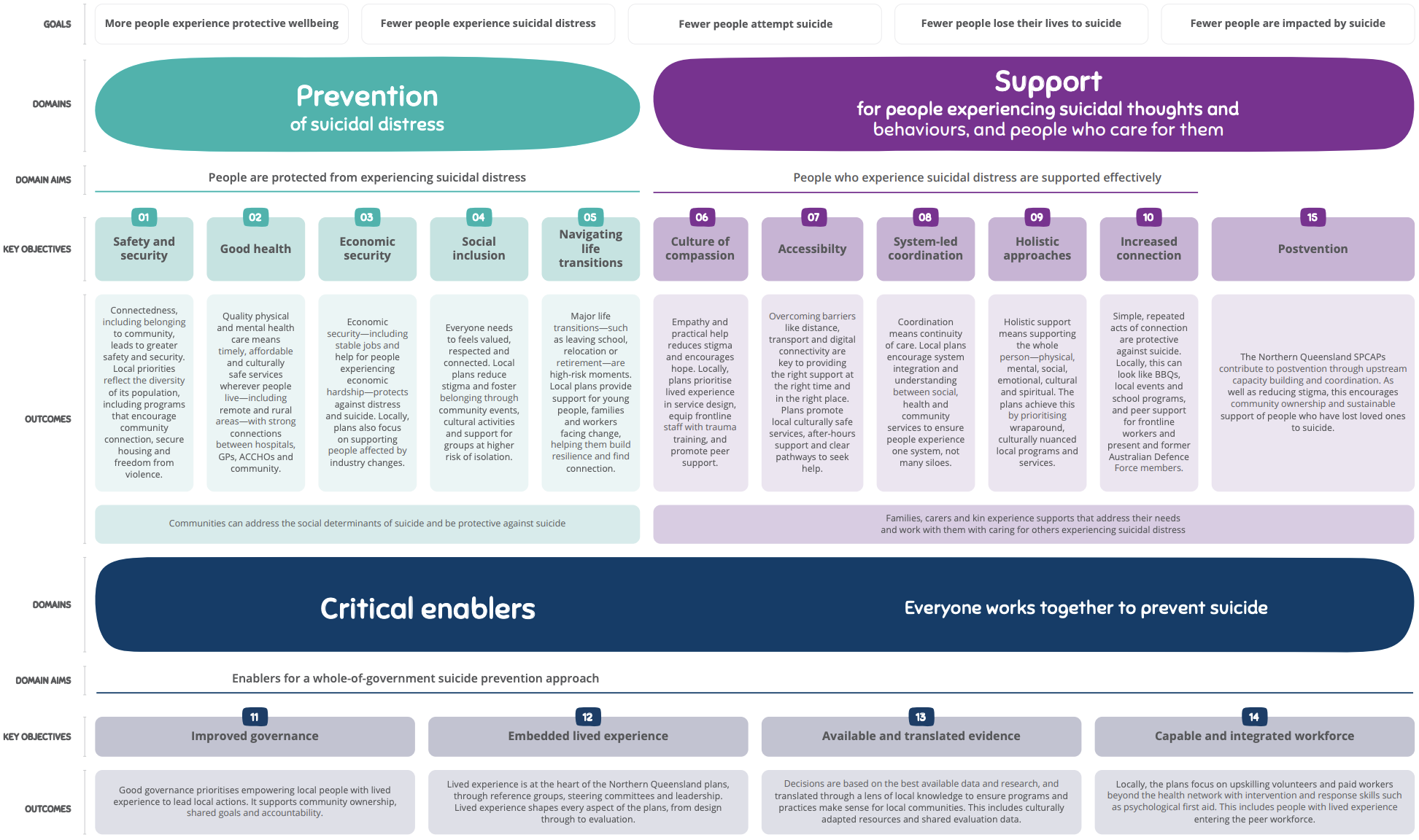
About the Framework
- This framework represents an initial translation of many months of collaboration, testing, consultation and learning across Northern Queensland. It brings together community insights, lived and living experience perspectives, qualitative evaluation findings and regional planning activity to create a shared approach to suicide prevention that is responsive to the social and economic determinants of suicide.
- The framework aligns with the Australian Suicide Prevention Planning Model (AuSPPM), the National Suicide Prevention Strategy 2025–2035, the National Suicide Prevention Outcomes Framework, relevant Queensland Government suicide prevention priorities, and broader regional planning including the Joint Regional Needs Assessment (JRNA) and Joint Regional Wellbeing Plan (JRWP). It supports NQPHN’s role to commission, collaborate and build capability while strengthening alignment across local, state and national priorities.
- A key feature of the framework is its recognition of lived and living experience leadership, community governance, and collective action as essential to sustainable change. It acknowledges that communities are not simply recipients of services, but active leaders in identifying priorities, shaping responses and creating solutions that reflect local strengths, culture and needs.
- The framework also recognises the importance of postvention, acknowledging the impact of suicide on individuals, families, carers, workplaces and communities. By strengthening local postvention coordination, peer support, recovery pathways and community-led healing, the framework seeks to reduce the long-term impacts of suicide and support stronger, more resilient communities.
- This framework supports the collective efforts of Northern Queensland’s four regional Suicide Prevention Community Action Plans (SPCAPs) and service delivery NQPHN commission in aftercare and intervention services and potential postvention supports and aligns with PHN performance measures, including PMRF CB06 and CO01, alongside the external objectives of the PHN Program Logic and Quintuple Aim.
- Importantly, this is an initial translation rather than a final model. Further development is underway through additional evidence review, outcome measurement, statistical planning, qualitative evaluation, and strategic planning activities. This work Suicide Prevention Strategic Directions Paper : NQPHN Region will inform a refreshed and more comprehensive version by February 2027, supporting continued alignment between community priorities, state and national policy directions, commissioning decisions, and future investment planning.
- Ultimately, the framework provides a shared foundation to help achieve a common vision: more people experience protective wellbeing, fewer people experience suicidal distress, fewer people attempt suicide, fewer people lose their lives to suicide, and fewer people are impacted by suicide. Achieving this vision requires communities, people with lived experience, organisations, governments and service systems working together towards shared goals.
A list of mental health and suicide prevention support services are listed in the drop down table below. Please note, NQPHN and the SPCAP lead agencies are not crisis or emergency services. For urgent support, call any of the numbers listed in the table below. If you need immediate help or are at risk of harm to yourself or others, call 000.
Support services
| Service | Description | Contact details | Website |
|---|---|---|---|
| 13 YARN | Aboriginal and Torres Strait Islander crisis support line. Available 24/7. No shame, no judgement, safe place to yarn. | 13 92 76 | www.13yarn.org.au |
| 1800 RESPECT | Free, 24/7 support for people impacted by domestic, family, or sexual violence. | 1800 732 732 | www.1800respect.org.au |
| Beyond Blue | 24/7 support programs to address issues related to depression, suicide, anxiety disorders, and other related mental illnesses. | 1300 224 636 | www.beyondblue.org.au |
| Head to Health | Local general mental health advice and support. You can make a free call to Head to Health between 8.30 am–5 pm weekdays (except public holidays). | 1800 595 212 | www.headtohealth.gov.au |
| Lifeline Australia | Lifeline is a national charity providing all Australians experiencing a personal crisis with access to 24 hour crisis support and suicide prevention. | 13 11 14 | www.lifeline.org.au |
| StandBy Support After Suicide Service | 24-hour community-based, suicide postvention program for people bereaved by suicide. | 1300 727 247 | www.standbysupport.com.au |
| Suicide Call Back Service | Free counselling for suicide prevention & mental health via telephone, online & video for anyone affected by suicidal thoughts, 24/7. | 1300 659 467 | www.suicidecallbackservice.org.au |
| QLife | LGBTI peer support and referral for people wanting to talk about a range of issues including sexuality, identity, gender, bodies, feelings, or relationships. | 1800 184 527 | www.qlife.org.au |
Related pages
- Mental Health and Alcohol and Other Drugs
- Medicare Mental Health Centre
- Medicare Mental Health Phone Service
- MyndKind
- Distress Brief Support
- Universal Aftercare
- Suicide prevention
- Community wellness and suicide prevention grants
- Psychological Therapies in RACH
- Initial Assessment and Referral – Decision Support Tool (IAR-DST)