
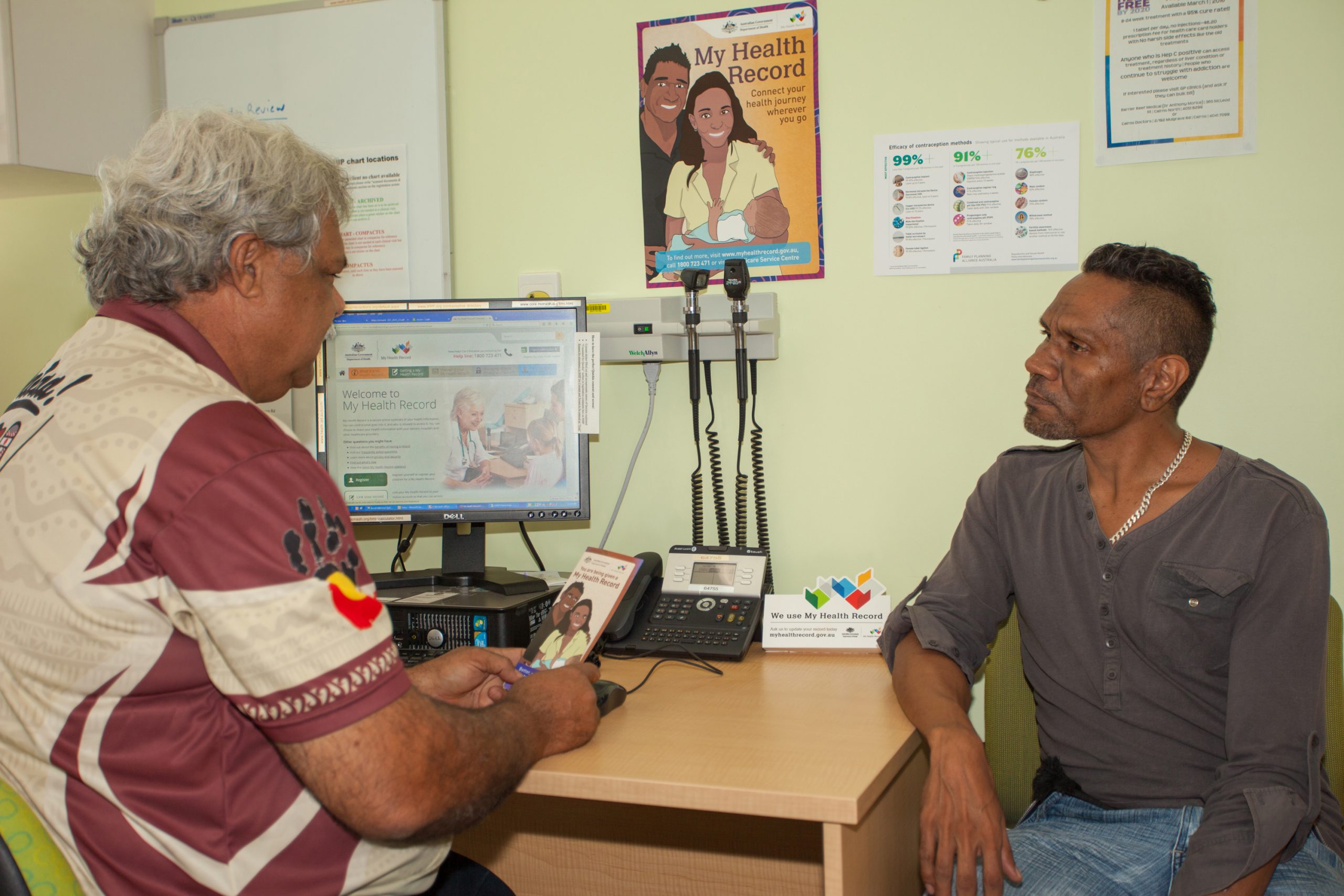
Northern Queensland Primary Health Network (NQPHN) is embarking on an ambitious 12-month program to dramatically improve access to culturally safe health assessments for the First Nations’ people within its catchment.
NQPHN Chief Executive Officer Robin Whyte said the organisation was aiming to bring General Practitioners, Aboriginal Community Controlled Health Services, the Royal Flying Doctor Service, and Hospital and Health Services’ Primary Care Clinics to take part in the year-long First Nations Continuous Quality Improvement (CQI) Program to improve primary care service to First Nation North Queenslanders.
“We believe the participant mix is a first in Australia,” she said.
“We are acutely aware across northern Queensland the care of First Nations people is fragmented and, in some instances, not culturally safe.
“NQPHN is very committed to making a tangible impact in this space, not more talk, or more measurement of the issue, but action on the ground.”
Ms Whyte said NQPHN estimated that only 11,000 of the 80,000 First Nations people living in the NQPHN region had received a comprehensive “715 Health Assessment” in the past 12 months.
“A coordinated and comprehensive approach is needed to improve the health situation, enhance clinical care and management, and reduce the health burden and preventable hospitalisation,” she said.
“The aim of the program is to work with primary care providers to provide First Nations people with increased access to coordinated, quality, and culturally safe care, using the 715 Health Assessment as the basis for identification of health needs.”
Ms Whyte said participating practices would receive Cultural Safety and Awareness training, free resources and education to assist with providing comprehensive, culturally sensitive health assessments as well as a host of other training and access to information and data.
Quarterly workshops will be held in Cairns, Townsville, and Mackay from May 2022 until June 2023, involving expert presenters, covering First Nations Australians Health: What you need to know, Aboriginal and/or Torres Strait Islander 715 Health Assessment, best practice for managing complex and chronic conditions experienced by First Nations’ Australians, and First Nations Mental Health and Alcohol and Other Drugs.
As part of the first educational session in August, Kidney Health Australia (KHA) will work with NQPHN to discuss Chronic Kidney Disease (CKD) in Aboriginal and/or Torres Strait Islanders.
“This First Nations peoples’ case study-based module explains the role of primary care in preventing and detecting CKD,” said KHA General Manager Clinical and Research Breonny Robson.
“Correctly staging CKD using Estimated Glomerular Filtration (eGFR) and urine Albumin-to-creatinine ratio (ACR) results will be covered along with how to create an individualised clinical action plan for an individual with CKD,” Ms Robson said.
The organisers have aligned the workshops in Cairns, Mackay and Townsville with the Kidney Kar Rally which departs Cairns on 11 August on a secret 5,000km route via the Gold Coast and finishes in Dubbo on 20 August. The rally raises awareness of kidney disease as well as fundraising for various Kidney Health Australia programs and research.
As well, a Kidney Karnival raised awareness of kidney health on 7 August at Muddy’s Event Lawn on the Cairns Esplanade. It included free kidney health checks, children’s entertainment, live music, and food stalls.
One of the key workshop presenters is Gurriny Yealamucka Health Service Aboriginal Director of Clinical Services and Senior Medical Officer Dr Jason King, who will be involved in two of the quarters, specifically Aboriginal & Torres Strait Islander 715 Health Assessment: Completing more and doing it better, and Chronic Disease Management.
First Australian, counselling psychologist and a research fellow with The Hopkins Centre at Griffith University, Dr Leda Barnett, will be one of the presenters at sessions next year.
Dr Barnett’s three-hour workshop will be presented in two chapters: mental health and alcohol and other drug use, and First Australian experiences of empowerment.