
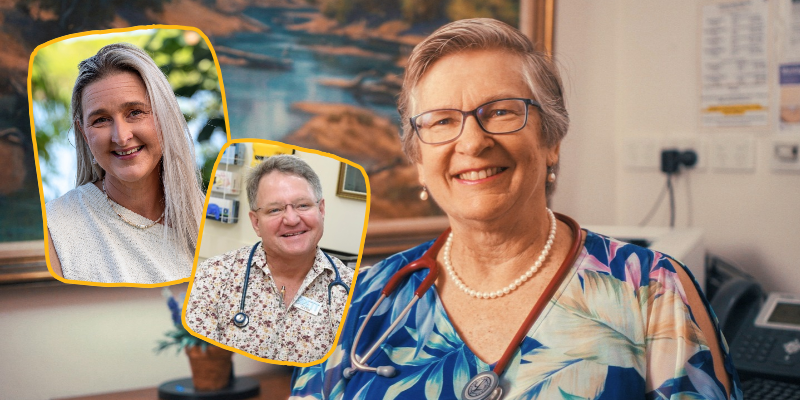
Born at the local hospital, Ingham enrolled nurse Megan Valinoti has never called anywhere else home.
Like her parents, grandparents, and great-grandparents before her, Megan has deep roots in Ingham and wouldn’t have it any other way.
From pristine beaches and nearby islands to a strong sense of community and an active outdoor lifestyle, Megan says the Hinchinbrook region offers the perfect balance between career and lifestyle.
“I love working in Ingham because of the work-life balance and the support that’s always there,” she said.
“I get to work alongside some amazing health professionals, and when our teams come together, it leads to better outcomes for our patients.
“If you’re thinking about rural healthcare, don’t think twice. Do it. You’ll learn and see so much.”
About 250km south, GP Dr Jean Covey has her own story.
When Dr Covey arrived in Charters Towers from Brisbane in 1993, she expected a short stint in country practice. More than 30 years later, she is still there.
“I was planning to do a trial in Townsville when I met a country doctor who encouraged me to give rural practice a go,” she said. “That doctor became my husband.
“I arrived and did obstetrics at the hospital, and those people are now coming in with their children. That’s a phenomenal position to find yourself in.
“I love the rural lifestyle, I love the feeling of community, and I love being able to practise medicine here.”
Ms Valinoti and Dr Covey are among the healthcare professionals featured in the new season of Live and Work in Paradise, a Northern Queensland Primary Health Network (NQPHN) workforce attraction campaign showcasing the career opportunities, lifestyle benefits, and community connections available across northern Queensland.
Dr Covey said rural general practice offered a wide scope of practice.
“One day you might be caring for a resident in a nursing home, the next supporting a complex patient who can’t travel to Townsville, or performing procedures such as skin lesion removals. No two days are ever the same,” she said.
“One of the most rewarding parts of practising medicine in a rural community is the appreciation you receive from your patients.
“For many people, being able to access care locally means they don’t have to travel long distances, and that’s something I never take for granted.”
NQPHN CEO Ben Tooth said the campaign highlighted the real experiences of healthcare professionals who had chosen to build their lives and careers in northern Queensland.
“Healthcare professionals are looking for more than just a job,” Mr Tooth said.
“They’re looking for a place where they can build a career, enjoy a great lifestyle, and feel part of a community.
“These stories demonstrate what makes northern Queensland stand out. They highlight career opportunities, scope of practice, strong community connections, and lifestyle that encourage many healthcare professionals to make northern Queensland home.”
For local Ingham GP Dr Brett Scott, who has served the Ingham community for more than 30 years, the appeal of regional practice comes down to two things.
“Freedom and friendship,” Dr Scott said.
“In country communities you still have those freedoms, and you appreciate people more when there are fewer of them.”
The second season of Live and Work in Paradise features healthcare professionals from Yungaburra, Charters Towers, Ingham, Sarina, Mackay, and Cooktown, sharing firsthand stories of the careers, communities, and lifestyles that make northern Queensland a destination of choice for healthcare workers.
Health professionals interested in exploring opportunities can learn more and watch the series here.